2026
The Missing Primitive: Diagnosing and Repairing Mathematical Reasoning in Large Language Models
Shuo Xing*, Zilin Dai*, Chengyuan Qian, Fangzhou Lin, Wenjing Chen, Ping He, Pan Lu, Alvaro Velasquez, Mohit Bansal, Zhengzhong Tu (* equal contribution)
arXiv preprint 2026
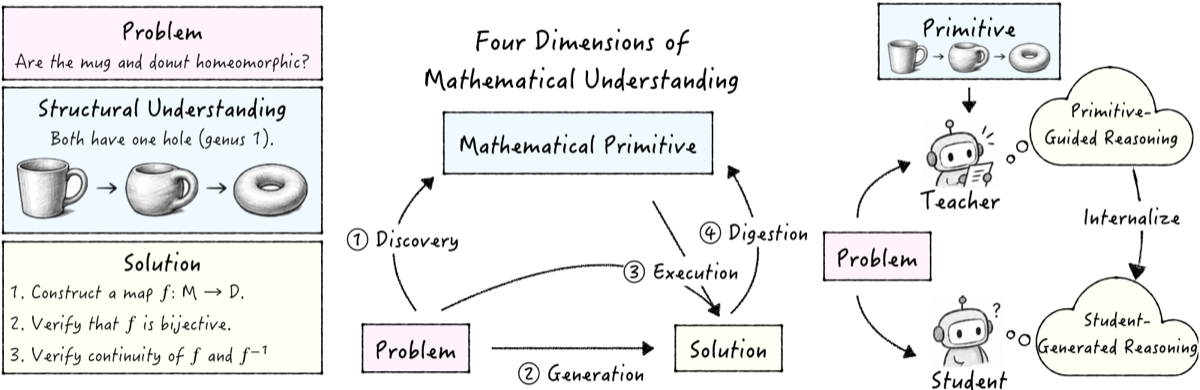
We take a first step toward systematically studying mathematical understanding in LLMs. We introduce the notion of Mathematical Primitive to probe structural mathematical understanding and propose Prim, a benchmark that evaluates mathematical reasoning along four dimensions: Discovery, Generation, Digestion, and Execution. Our diagnosis shows that solution accuracy masks distinct capability profiles and that Discovery is the dominant bottleneck. Building on these findings, we introduce Absorb, a primitive-privileged self-distillation framework that consistently improves mathematical reasoning across model scales and challenging benchmarks.
The Missing Primitive: Diagnosing and Repairing Mathematical Reasoning in Large Language Models
Shuo Xing*, Zilin Dai*, Chengyuan Qian, Fangzhou Lin, Wenjing Chen, Ping He, Pan Lu, Alvaro Velasquez, Mohit Bansal, Zhengzhong Tu (* equal contribution)
arXiv preprint 2026
We take a first step toward systematically studying mathematical understanding in LLMs. We introduce the notion of Mathematical Primitive to probe structural mathematical understanding and propose Prim, a benchmark that evaluates mathematical reasoning along four dimensions: Discovery, Generation, Digestion, and Execution. Our diagnosis shows that solution accuracy masks distinct capability profiles and that Discovery is the dominant bottleneck. Building on these findings, we introduce Absorb, a primitive-privileged self-distillation framework that consistently improves mathematical reasoning across model scales and challenging benchmarks.
AdaptFuse: Training-Free Sequential Preference Inference via Externalized Bayesian Computation
Fangzhou Lin*, Zilin Dai*, Shuo Xing, Peiran Li, Siyuan Yang, Qianwen Ge, Kazunori Yamada, Yang Zhou, Ziming Zhang, Haichong Zhang, Zhengzhong Tu (* equal contribution)
arXiv preprint 2026
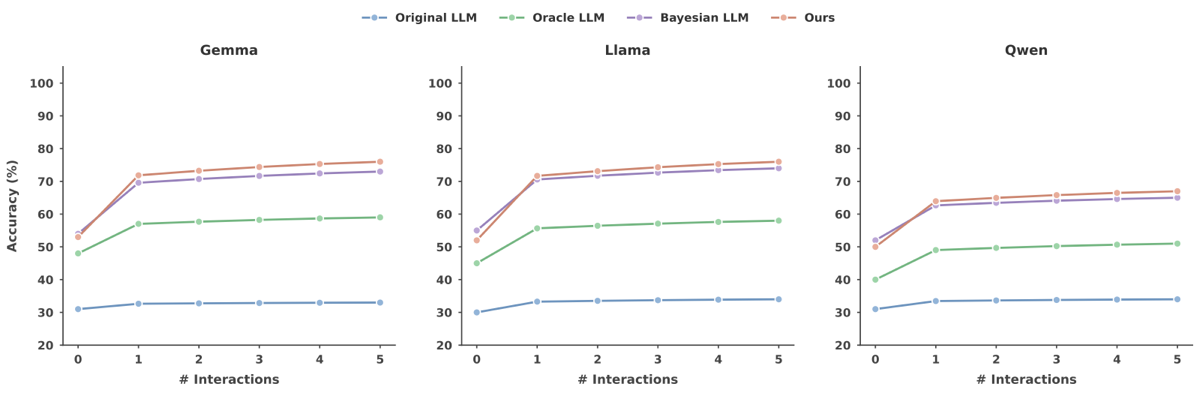
LLMs struggle to accumulate evidence across multiple rounds of user interaction in a manner consistent with Bayesian inference. We propose AdaptFuse, a training-free framework that externalizes probabilistic computation from the LLM: a symbolic module maintains a Bayesian posterior over a discrete hypothesis set, while a frozen LLM contributes semantic reasoning via multi-sample Dirichlet aggregation, and the two are combined through entropy-adaptive fusion. Across flight recommendation, hotel recommendation, and web shopping, AdaptFuse consistently outperforms both prompting baselines and fine-tuned Bayesian Teaching models, without storing or training on sensitive user data.
AdaptFuse: Training-Free Sequential Preference Inference via Externalized Bayesian Computation
Fangzhou Lin*, Zilin Dai*, Shuo Xing, Peiran Li, Siyuan Yang, Qianwen Ge, Kazunori Yamada, Yang Zhou, Ziming Zhang, Haichong Zhang, Zhengzhong Tu (* equal contribution)
arXiv preprint 2026
LLMs struggle to accumulate evidence across multiple rounds of user interaction in a manner consistent with Bayesian inference. We propose AdaptFuse, a training-free framework that externalizes probabilistic computation from the LLM: a symbolic module maintains a Bayesian posterior over a discrete hypothesis set, while a frozen LLM contributes semantic reasoning via multi-sample Dirichlet aggregation, and the two are combined through entropy-adaptive fusion. Across flight recommendation, hotel recommendation, and web shopping, AdaptFuse consistently outperforms both prompting baselines and fine-tuned Bayesian Teaching models, without storing or training on sensitive user data.
Frozen Language Anchors as Noise-Robust Priors for Domain Generalization under Label Noise: An Empirical Study
Zilin Dai, Lehong Wang, Fangzhou Lin, Ziming Zhang, Wang Lu
European Conference on Computer Vision (ECCV) E.T. 2026
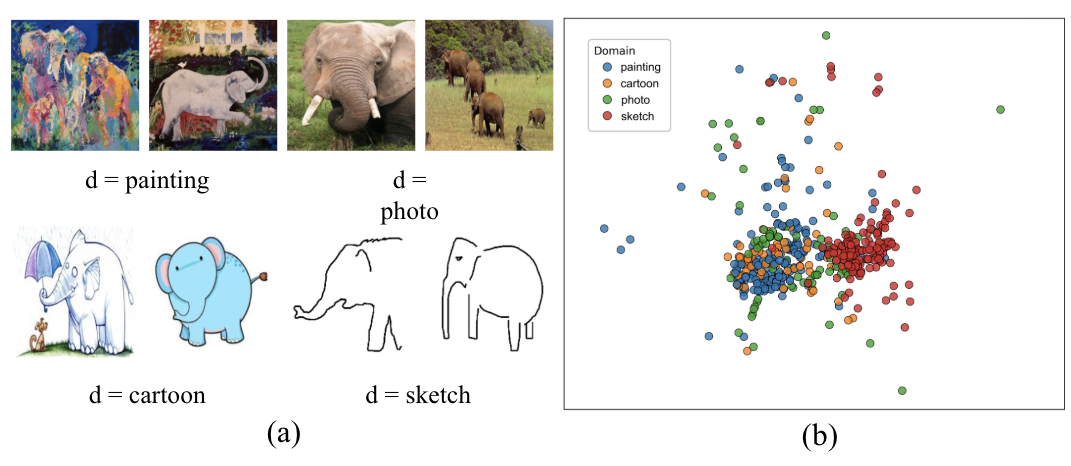
Real-world machine learning applications often face both distribution shift and label noise. We study semantic representations from frozen language models as domain-invariant anchors, and use a weighted loss that adjusts each sample's contribution based on its similarity to the corresponding language anchor, making models more robust to noisy labels while generalizing across unseen domains.
Frozen Language Anchors as Noise-Robust Priors for Domain Generalization under Label Noise: An Empirical Study
Zilin Dai, Lehong Wang, Fangzhou Lin, Ziming Zhang, Wang Lu
European Conference on Computer Vision (ECCV) E.T. 2026
Real-world machine learning applications often face both distribution shift and label noise. We study semantic representations from frozen language models as domain-invariant anchors, and use a weighted loss that adjusts each sample's contribution based on its similarity to the corresponding language anchor, making models more robust to noisy labels while generalizing across unseen domains.
DeformX: A Versatile Co-Simulation Framework for Deformable Linear Objects
Yi Yang*, Xiang Fei*, Lehong Wang*, Chenhao Li, Zilin Dai, Henry Kou, Lu Li, Howie Choset (* equal contribution)
IEEE/RSJ International Conference on Intelligent Robots and Systems (IROS) 2026
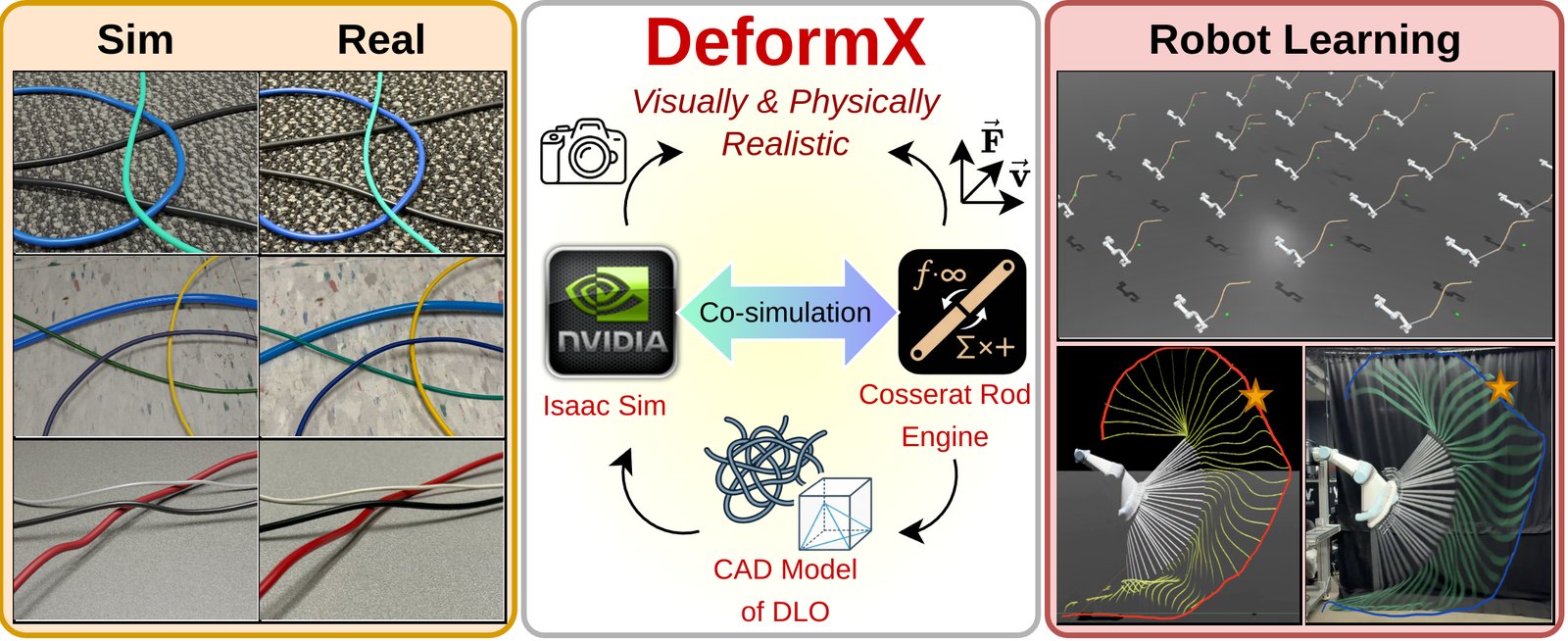
DeformX couples a Cosserat rod physics engine with NVIDIA Isaac Sim to simulate deformable linear objects such as cables and ropes with physically faithful dynamics, self-collision, and contact with free-form meshes, while rendering them realistically through mesh skinning. Fine-tuning SAM3 on DeformX data improves real-image wire segmentation by 10.2% mAP@75, and a rope-swinging policy trained purely in simulation transfers to a real UR5e arm.
DeformX: A Versatile Co-Simulation Framework for Deformable Linear Objects
Yi Yang*, Xiang Fei*, Lehong Wang*, Chenhao Li, Zilin Dai, Henry Kou, Lu Li, Howie Choset (* equal contribution)
IEEE/RSJ International Conference on Intelligent Robots and Systems (IROS) 2026
DeformX couples a Cosserat rod physics engine with NVIDIA Isaac Sim to simulate deformable linear objects such as cables and ropes with physically faithful dynamics, self-collision, and contact with free-form meshes, while rendering them realistically through mesh skinning. Fine-tuning SAM3 on DeformX data improves real-image wire segmentation by 10.2% mAP@75, and a rope-swinging policy trained purely in simulation transfers to a real UR5e arm.
WireSeg-32K: A Physics-Grounded Synthetic Dataset for Wire Instance Segmentation
Zilin Dai, Lehong Wang, Yi Yang, Xiang Fei
Synthetic Data for Computer Vision Workshop @ CVPR 2026
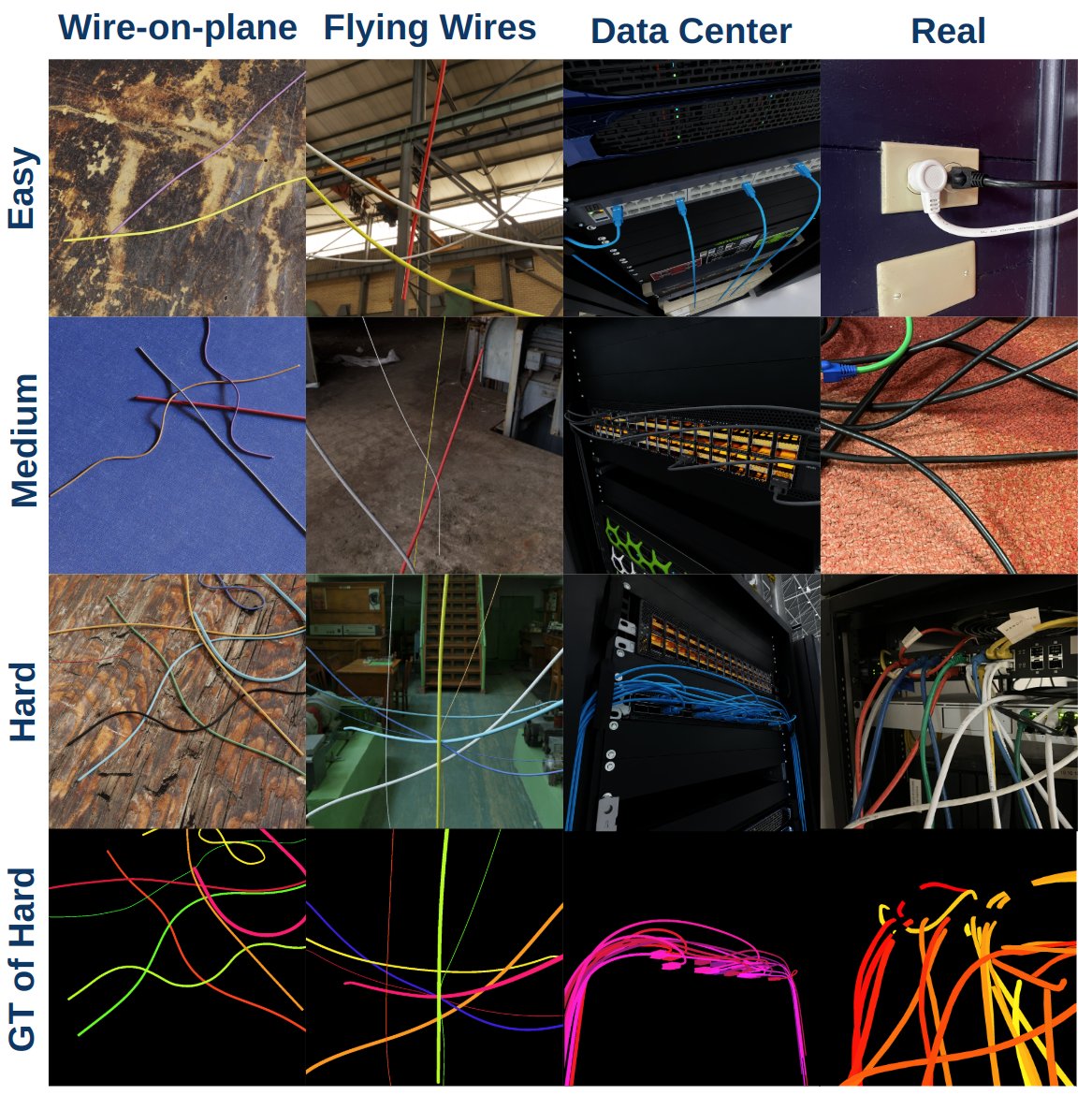
Wires and cables are hard to segment because they are thin, highly deformable, and frequently self-occluded, and instance-level annotations are expensive. We present WireSeg-32K, a synthetic dataset with 32,000 RGB images, instance masks, depth maps, and a real-world test set, generated by coupling Cosserat-rod dynamics with photorealistic Isaac Sim rendering. LoRA fine-tuning SAM3 on WireSeg-32K alone improves real-world mAP@75 by 10.2%.
WireSeg-32K: A Physics-Grounded Synthetic Dataset for Wire Instance Segmentation
Zilin Dai, Lehong Wang, Yi Yang, Xiang Fei
Synthetic Data for Computer Vision Workshop @ CVPR 2026
Wires and cables are hard to segment because they are thin, highly deformable, and frequently self-occluded, and instance-level annotations are expensive. We present WireSeg-32K, a synthetic dataset with 32,000 RGB images, instance masks, depth maps, and a real-world test set, generated by coupling Cosserat-rod dynamics with photorealistic Isaac Sim rendering. LoRA fine-tuning SAM3 on WireSeg-32K alone improves real-world mAP@75 by 10.2%.
2025
Interactive Real-Time Speaker Diarization Correction with Human Feedback
Xinlu He, Yiwen Guan, Badrivishal Paurana, Zilin Dai, Jacob Whitehill
arXiv preprint 2025
We propose an LLM-assisted in-meeting speaker correction system that lets users fix speaker attribution errors through brief corrective feedback. After streaming ASR and diarization, the system presents concise LLM-generated summaries to help users spot important speaker errors, and incorporates feedback by updating the transcript and adding online speaker enrollments. On the AMI headset test set, it reduces DER by 31.99% and speaker substitution error by 52.68% relative to a streaming baseline.
Interactive Real-Time Speaker Diarization Correction with Human Feedback
Xinlu He, Yiwen Guan, Badrivishal Paurana, Zilin Dai, Jacob Whitehill
arXiv preprint 2025
We propose an LLM-assisted in-meeting speaker correction system that lets users fix speaker attribution errors through brief corrective feedback. After streaming ASR and diarization, the system presents concise LLM-generated summaries to help users spot important speaker errors, and incorporates feedback by updating the transcript and adding online speaker enrollments. On the AMI headset test set, it reduces DER by 31.99% and speaker substitution error by 52.68% relative to a streaming baseline.
From Flat to Form-Fitting: A Computational Geometry Approach to 3D Conformal Electronics Design and Rapid Prototyping
Lehong Wang, Zilin Dai, Yuchen Wu, Ye Jin, Colm Barry, Tina Tian, Fujun Ruan, Shricharan Shastry, Rahul Panat, Gary K. Fedder, Howie Choset, Lu Li
IEEE International Conference on Automation Science and Engineering (CASE) 2025
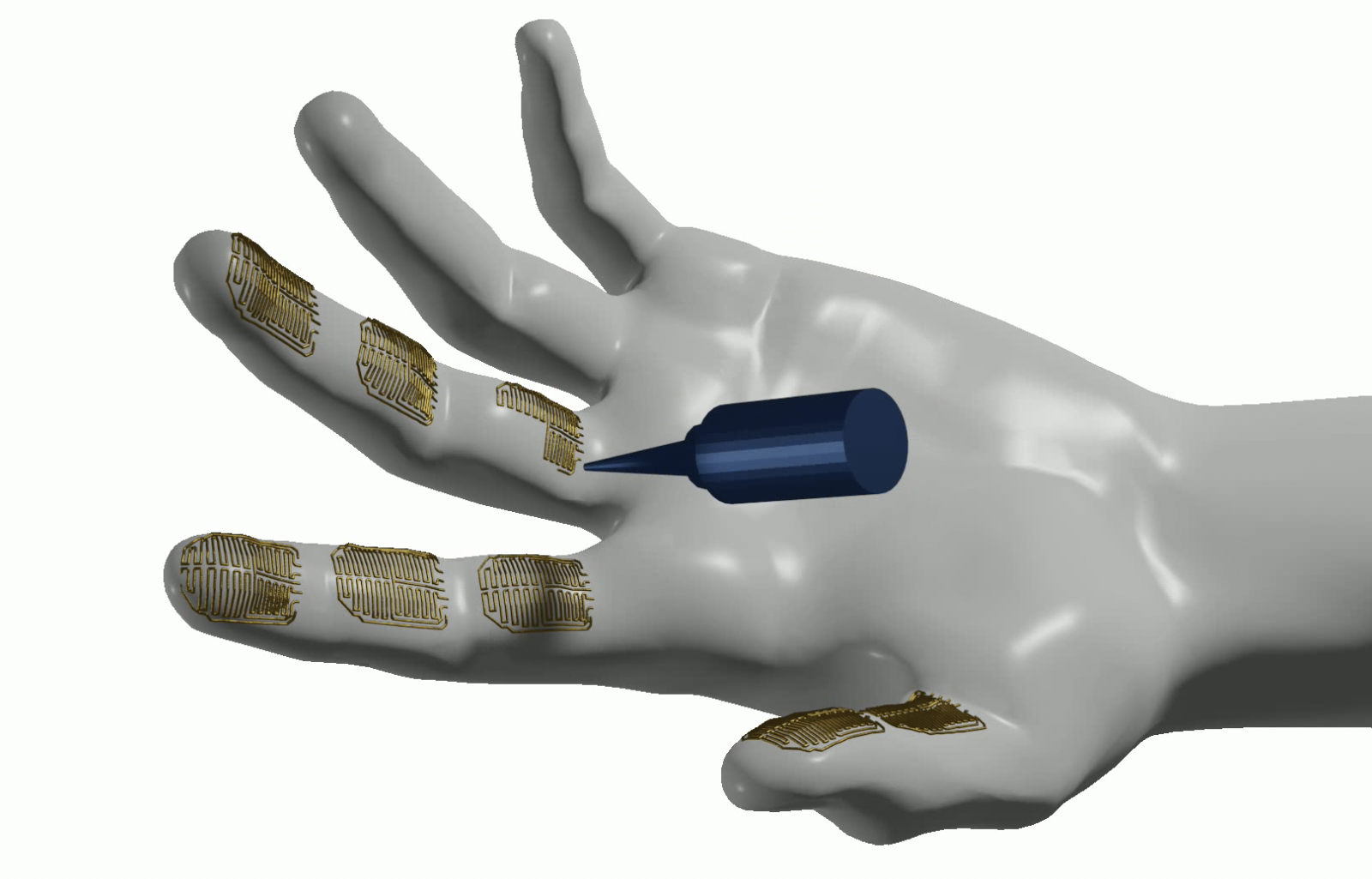
We present a software pipeline that maps existing 2D PCB designs onto arbitrary, highly curved 3D surfaces and generates printing motions for aerosol jet additive manufacturing, removing the need to hand-design 3D circuit traces in CAD and enabling rapid prototyping of conformal electronics.
From Flat to Form-Fitting: A Computational Geometry Approach to 3D Conformal Electronics Design and Rapid Prototyping
Lehong Wang, Zilin Dai, Yuchen Wu, Ye Jin, Colm Barry, Tina Tian, Fujun Ruan, Shricharan Shastry, Rahul Panat, Gary K. Fedder, Howie Choset, Lu Li
IEEE International Conference on Automation Science and Engineering (CASE) 2025
We present a software pipeline that maps existing 2D PCB designs onto arbitrary, highly curved 3D surfaces and generates printing motions for aerosol jet additive manufacturing, removing the need to hand-design 3D circuit traces in CAD and enabling rapid prototyping of conformal electronics.
A Strong View-Free Baseline Approach for Single-View Image Guided Point Cloud Completion
Zilin Dai*, Fangzhou Lin*, Rigved Sanku*, Songlin Hou, Kazunori D Yamada, Haichong K. Zhang, Ziming Zhang (* equal contribution)
arXiv preprint 2025
Single-view image guided point cloud completion reconstructs a complete point cloud from a partial input with the help of a single-view image, but whether the image guidance is fundamentally necessary remains largely unexamined. We propose a strong view-free baseline: an attention-based multi-branch encoder-decoder with a hierarchical self-fusion mechanism that takes only partial point clouds as input, and outperforms state-of-the-art image-guided methods on ShapeNet-ViPC.
A Strong View-Free Baseline Approach for Single-View Image Guided Point Cloud Completion
Zilin Dai*, Fangzhou Lin*, Rigved Sanku*, Songlin Hou, Kazunori D Yamada, Haichong K. Zhang, Ziming Zhang (* equal contribution)
arXiv preprint 2025
Single-view image guided point cloud completion reconstructs a complete point cloud from a partial input with the help of a single-view image, but whether the image guidance is fundamentally necessary remains largely unexamined. We propose a strong view-free baseline: an attention-based multi-branch encoder-decoder with a hierarchical self-fusion mechanism that takes only partial point clouds as input, and outperforms state-of-the-art image-guided methods on ShapeNet-ViPC.
Bridging Large Language Models and Single-Cell Transcriptomics in Dissecting Selective Motor Neuron Vulnerability
Douglas Jiang, Zilin Dai, Luxuan Zhang, Qiyi Yu, Haoqi Sun, Feng Tian
arXiv preprint 2025
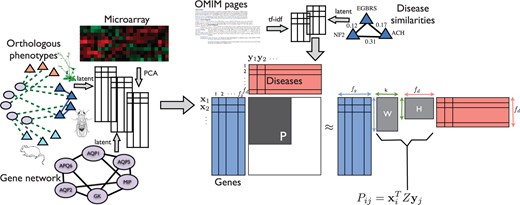
We present a framework that leverages gene-specific textual annotations from the NCBI Gene database to generate biologically contextualized cell embeddings. For each cell in an scRNA-seq dataset, genes are ranked by expression, their descriptions are embedded with large language models, and an expression-weighted average yields a compact, semantically rich representation for cell-type clustering, cell vulnerability dissection, and trajectory inference.
Bridging Large Language Models and Single-Cell Transcriptomics in Dissecting Selective Motor Neuron Vulnerability
Douglas Jiang, Zilin Dai, Luxuan Zhang, Qiyi Yu, Haoqi Sun, Feng Tian
arXiv preprint 2025
We present a framework that leverages gene-specific textual annotations from the NCBI Gene database to generate biologically contextualized cell embeddings. For each cell in an scRNA-seq dataset, genes are ranked by expression, their descriptions are embedded with large language models, and an expression-weighted average yields a compact, semantically rich representation for cell-type clustering, cell vulnerability dissection, and trajectory inference.
2024
Fully FDM-Printed Soft Hand Exoskeleton
Zilin Dai*, Lehong Wang*, Markus P. Nemitz (* equal contribution)
ICRA Workshop on Emerging Technologies in Smart Exoskeleton Systems 2024
We design parameterized soft pneumatic hand exoskeletons that can be printed entirely on standard FDM printers, making personalized assistive devices affordable and easy to fabricate.
Fully FDM-Printed Soft Hand Exoskeleton
Zilin Dai*, Lehong Wang*, Markus P. Nemitz (* equal contribution)
ICRA Workshop on Emerging Technologies in Smart Exoskeleton Systems 2024
We design parameterized soft pneumatic hand exoskeletons that can be printed entirely on standard FDM printers, making personalized assistive devices affordable and easy to fabricate.
Vision-based FDM Printing for Fabricating Airtight Soft Actuators
Zilin Dai*, Yijia Wu*, Haotian Liu, Lehong Wang, Markus P. Nemitz (* equal contribution)
IEEE International Conference on Soft Robotics (RoboSoft) 2024 (Oral)
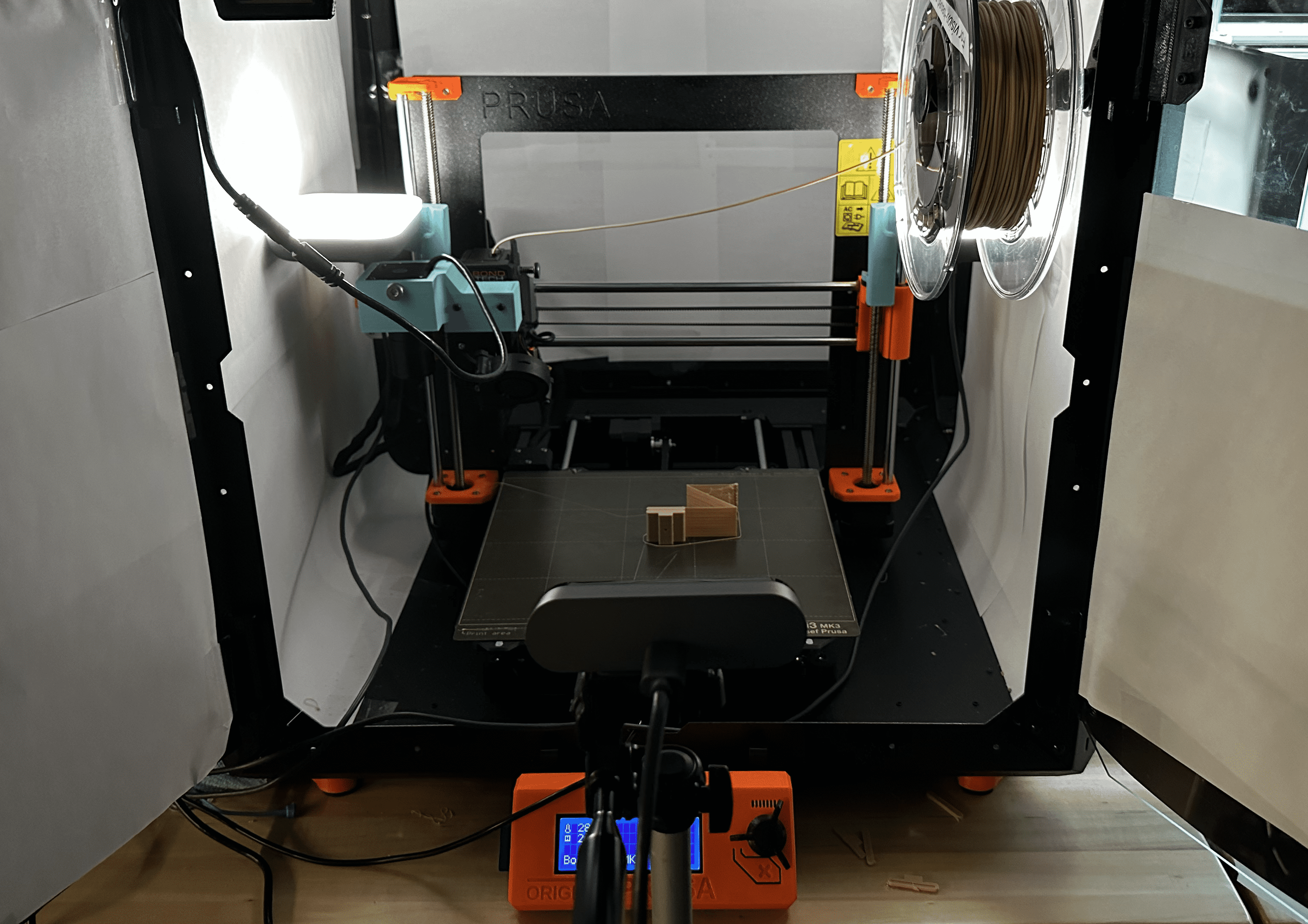
Pneumatic soft robots are typically fabricated by manual molding. We propose a low-cost approach to improve the print quality of desktop fused deposition modeling by adding a webcam that monitors printing and detects and corrects defects such as holes or gaps, improving the air-tightness of printed pneumatic actuators without fine-tuning printing parameters.
Vision-based FDM Printing for Fabricating Airtight Soft Actuators
Zilin Dai*, Yijia Wu*, Haotian Liu, Lehong Wang, Markus P. Nemitz (* equal contribution)
IEEE International Conference on Soft Robotics (RoboSoft) 2024 (Oral)
Pneumatic soft robots are typically fabricated by manual molding. We propose a low-cost approach to improve the print quality of desktop fused deposition modeling by adding a webcam that monitors printing and detects and corrects defects such as holes or gaps, improving the air-tightness of printed pneumatic actuators without fine-tuning printing parameters.
2023
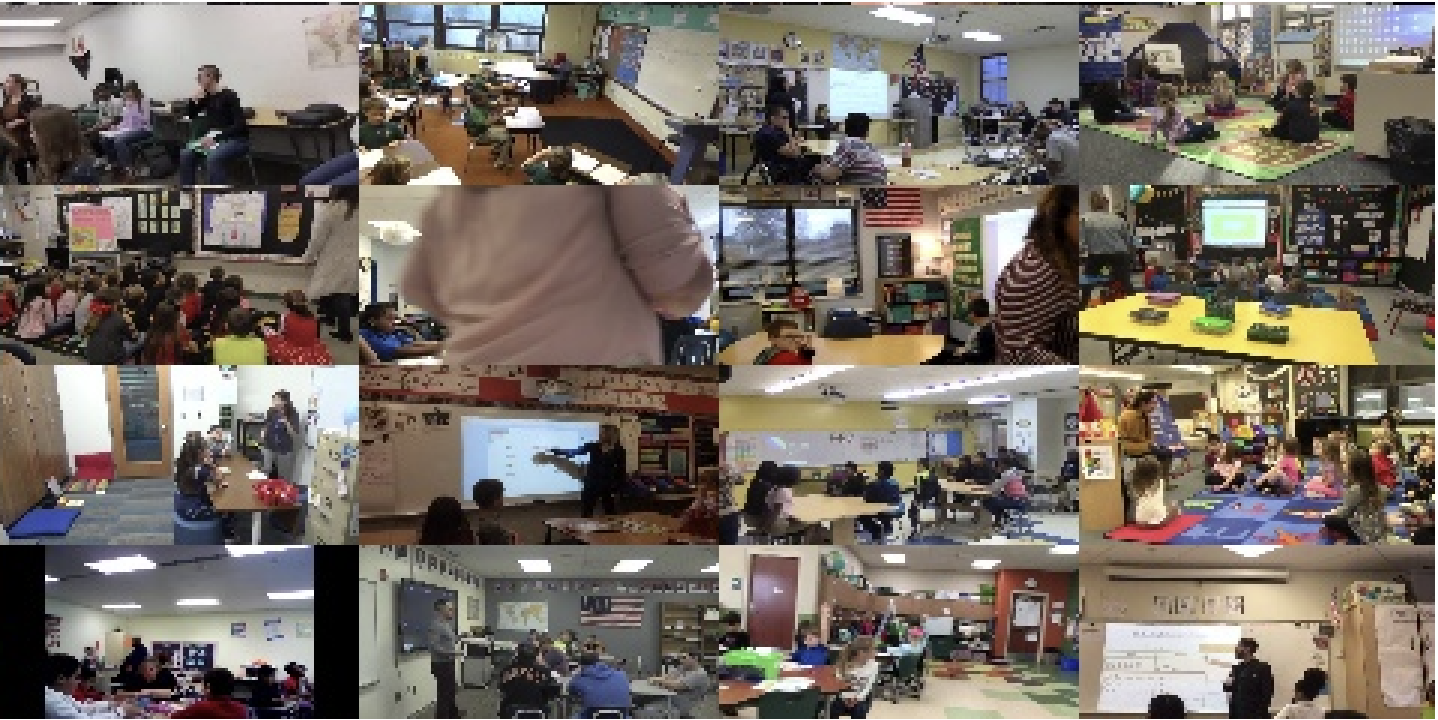
In Search of Negative Moments: Multi-Modal Analysis of Teacher Negativity in Classroom Observation Videos
Zilin Dai, Andrew McReynolds, Jacob Richard Whitehill
International Conference on Educational Data Mining (EDM) 2023
We build automatic and semi-automatic systems that combine speech emotion recognition, language analysis, and facial expression detection to find moments of teacher negativity in classroom observation videos.
In Search of Negative Moments: Multi-Modal Analysis of Teacher Negativity in Classroom Observation Videos
Zilin Dai, Andrew McReynolds, Jacob Richard Whitehill
International Conference on Educational Data Mining (EDM) 2023
We build automatic and semi-automatic systems that combine speech emotion recognition, language analysis, and facial expression detection to find moments of teacher negativity in classroom observation videos.
Patents
Circular RNAs and Preparation Methods Thereof
Dongsheng Dai, Lynn Shan, Zilin Dai
International Publication No. WO 2024/051842 A1, 2024
Circular RNAs for Expressing Urate Oxidase, and Preparation Methods and Uses Thereof
Dongsheng Dai, Lynn Shan, Zilin Dai
International Publication No. WO 2024/051842 A1, 2024